Pilot in Command: What AI-Assisted Web Work Actually Looks Like

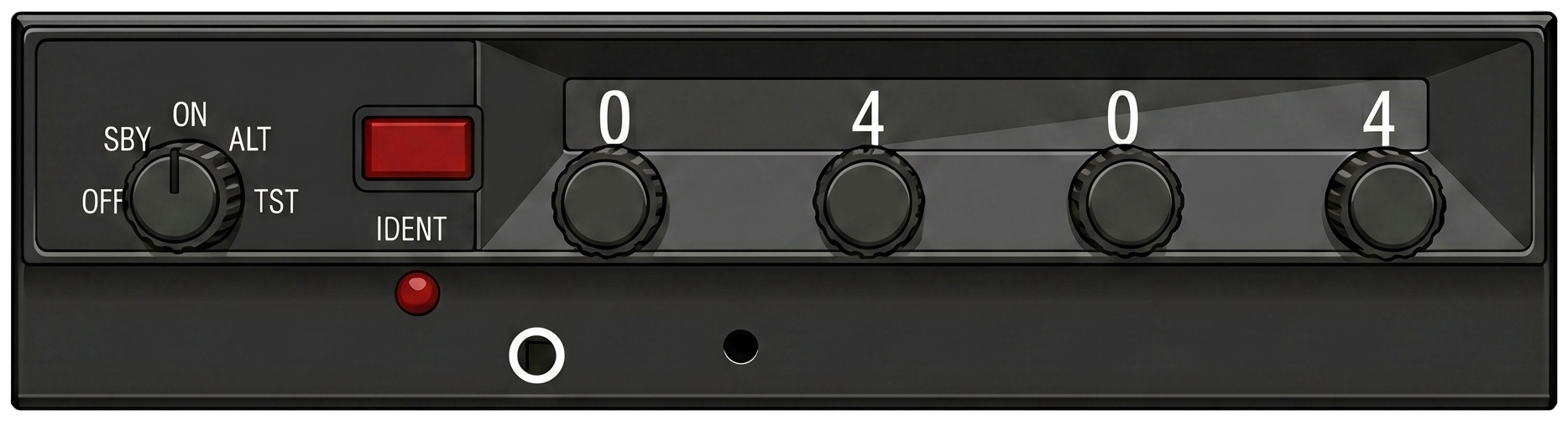
The footer of this website reads “Pilot in command. AI as wingman.” I want to explain what that means, because aviation business owners hiring a web partner in 2026 have a fair concern.
The wider internet has flooded with AI-generated content. People are watching websites get thrown together by what’s now called vibe coding: a prompt, a paste, a deploy, and nobody read what shipped. The buyers in aviation are not wrong to wonder whether the next person they hire is going to do that to their site.
The honest answer is yes, I use AI in my work every day. The honest answer is also that this doesn’t mean what most people now assume it means.
What “Pilot in Command” actually means
In aviation, Pilot in Command isn’t about who’s holding the yoke at any given moment. It’s about who’s accountable for the flight.
The autopilot might be flying the airplane. The first officer might be flying the airplane. Air traffic control might be vectoring you onto a heading you didn’t file. The PIC is still the PIC. The FAA’s definition in 14 CFR §1.1 begins with “the person who has final authority and responsibility for the operation and safety of the flight.” If something goes wrong, that’s the person explaining the decisions later, signing the paperwork, and carrying the certificate.
Every pilot I know loves autopilot. Modern aircraft are stuffed with automation, and the automation is incredible. What pilots don’t love is the idea of pretending the autopilot is in charge. There’s a difference between using a tool and ceding the role.
Translating that to web work
I use AI tools daily. Several of them, actually. Some days I’m running research through one model, drafting copy in another, asking a third to review code I wrote yesterday. The same way a glass-cockpit airplane runs the autopilot alongside the flight management computer alongside the traffic awareness alongside synthetic vision. Multiple systems doing real work, in parallel, all the time.
The part that doesn’t happen is the part where any of those systems flies the airplane unsupervised. Nobody at Trinity Aviation Solutions presses Enter and walks away from the keyboard. Every line of code, every paragraph of copy, every recommendation in a client proposal: a human read it. I read it. If you’re hiring me, you’re hiring my eyes on the work, not just my prompts.
That’s what “AI as wingman” actually means. A wingman is a trusted partner in the formation. They fly tight, they watch your blind spot, they call out what you miss. They are not the lead.
Where AI shows up in my day
If you want specifics rather than reassurance, here’s the picture from inside the agency.
Research is where the biggest gains live. A keyword research pass that used to eat half a day now takes about ninety minutes. A competitive landscape review where I’d manually scan five competitor sites now covers thirty. The breadth is dramatically different. The depth still falls to me. Actually understanding what those competitors are doing, and why, is the part the tools don’t do. They give me more raw material to think through. They don’t think it through for me.
Drafting is the second biggest. First drafts of copy, of code, of documentation, of project plans. AI tools don’t get blocked the way I do, and they’re willing to hand me three angles when I’m stuck on one. A useful fraction of what they produce gets thrown out, which is fine. The fraction that survives saves time worth saving.
Code review is the quietest gain, and possibly the most valuable. Reading code I wrote three months ago is harder than reading code I wrote this morning. An AI tool sitting next to me, scanning for typos, missing edge cases, and security concerns, catches things I would have missed on a tired afternoon. I still make the call. The catch is the contribution.
Analysis on large datasets is where I think the tools genuinely outperform me on speed alone. Pulling patterns out of an analytics dump, or a stack of client interview transcripts, or a set of audit reports. The threads surface in minutes. I still decide which threads matter, because that’s the part that needs context the model doesn’t have.
Documentation is where AI tools rescue me from myself. Writing internal documentation in real time isn’t a strength of mine. Writing it after the fact, from rough notes, with help turning the notes into something readable, is a workflow I’ll defend. Future-me thanks the workflow for it.
What stays in my hands
The shorter list. The one that matters more.
Strategic decisions are mine. Every call on a project (what to recommend, what to push back on, when to walk away) is a human judgment. AI is useful for surfacing options. It isn’t useful for picking the right one.
Client conversations are mine. If you’re on a call with Trinity Aviation Solutions, you’re talking to me, not an automated stand-in. The agreements that come out of those calls are agreements I’m making.
Quality verification is mine. Nothing ships to a live site unread. Not a paragraph of copy, not a line of CSS, not a configuration change. The whole point of the PIC framing breaks down if I let something ship that nobody actually read.
Pricing and scope are mine. A real evaluation of a real project, with judgment about what’s involved. AI tools don’t price projects well; their estimates are usually wrong in interesting ways.
This post itself is an example. AI helped me think through the structure and tighten passages where I’d over-written the first draft. The position you’re reading is still mine. So is the byline.
On vibe coding
There’s a phrase that’s been making the rounds in web development circles lately. People call it vibe coding. The practice is roughly this: prompt an AI model to generate code, copy the output into a project, ship it. Sometimes without reading it carefully. Sometimes without running it. Sometimes without understanding it.
You can usually spot vibe-coded work in production. It has a signature. APIs that don’t exist because the model hallucinated them. Syntax errors that any human reviewer would have caught. Security holes nobody opened the file long enough to see. Copy that’s plausible at a glance and wrong at the second glance. Accessibility regressions. Performance problems that nobody noticed because nobody loaded the page.
The failure mode isn’t AI. The failure mode is humans abdicating the PIC role and letting the autopilot fly the airplane into the ground. The tools didn’t get worse. Somebody stopped reading the instruments.
This matters for aviation web work in a particular way. Aviation buyers can usually tell. A flight school owner reads three lines of body copy and knows whether you’ve ever talked to an actual instructor. An FBO operator reads your fuel-price page and knows whether you’ve ever bought avgas. Vibe-coded work doesn’t survive that read. It’s an industry that punishes fakery on first contact.
What this should mean if you hire me
In practice, the Pilot-in-Command position translates into a few specifics worth naming.
The work gets done honestly. I use AI. I’ll tell you which parts I use it for. I’m not going to pretend otherwise.
Accountability runs to me. Anything that ships on your site has been read by me, tested by me, and stands behind my name. If something breaks, you’re calling a person, not parsing an automation log.
Speed is calibrated to the work, not the other way around. Some parts of my workflow are accelerated by AI tools. Other parts are deliberately slow: strategy, judgment, client relationships, quality reads. AI doesn’t make those parts faster. It mostly provides faster ways to get them wrong if you let it.
Four words at the bottom of every page on this site is the position. The aviation industry figured out long ago how to live with powerful automation responsibly. The answer wasn’t refusing to use it. The answer wasn’t hiding it. The answer was being clear about who signs the logbook when the flight is over.